


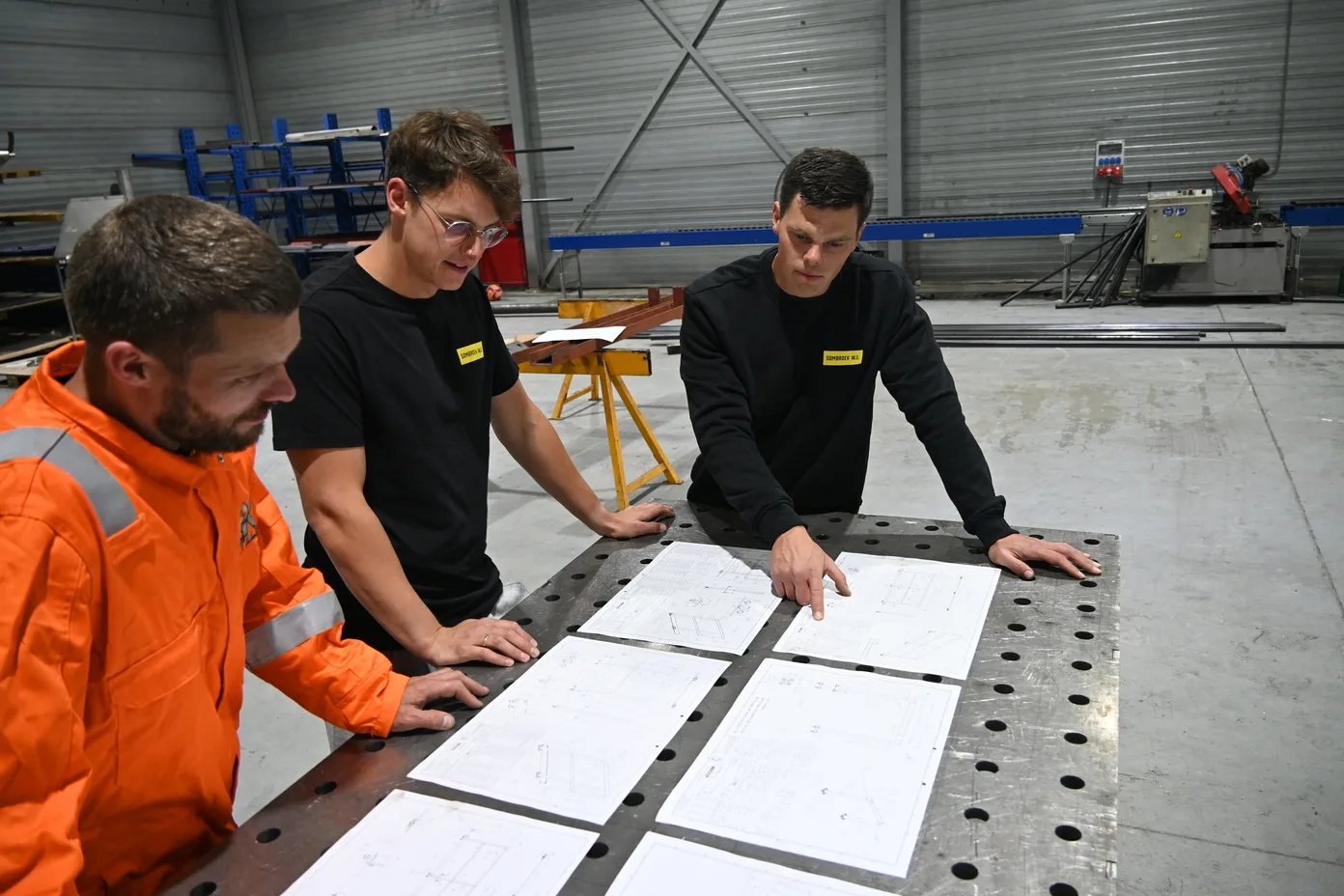
Welding coordinator and EN 1090: when do you need one?
From execution class EXC2, EN 1090 requires a welding coordinator. What do they do, what level of knowledge is needed and what does it mean for your company?
What does a welding coordinator do?
Do you make welded steel structures with CE marking? Then EN 1090 applies to you. From execution class EXC2 onwards, that standard requires a welding coordinator. In this article you will read what a welding coordinator does, which level of knowledge is required and how to arrange it.
A welding coordinator is responsible for everything to do with welding, from preparation to the final checks. The tasks involved are set out in ISO 14731. The company appoints at least one responsible welding coordinator: the Responsible Welding Coordinator (RWC).
The welding coordinator does not have to do everything personally. Tasks can be delegated, but the coordinator remains responsible for the whole. They must, however, have enough knowledge and experience for the welding work they supervise.
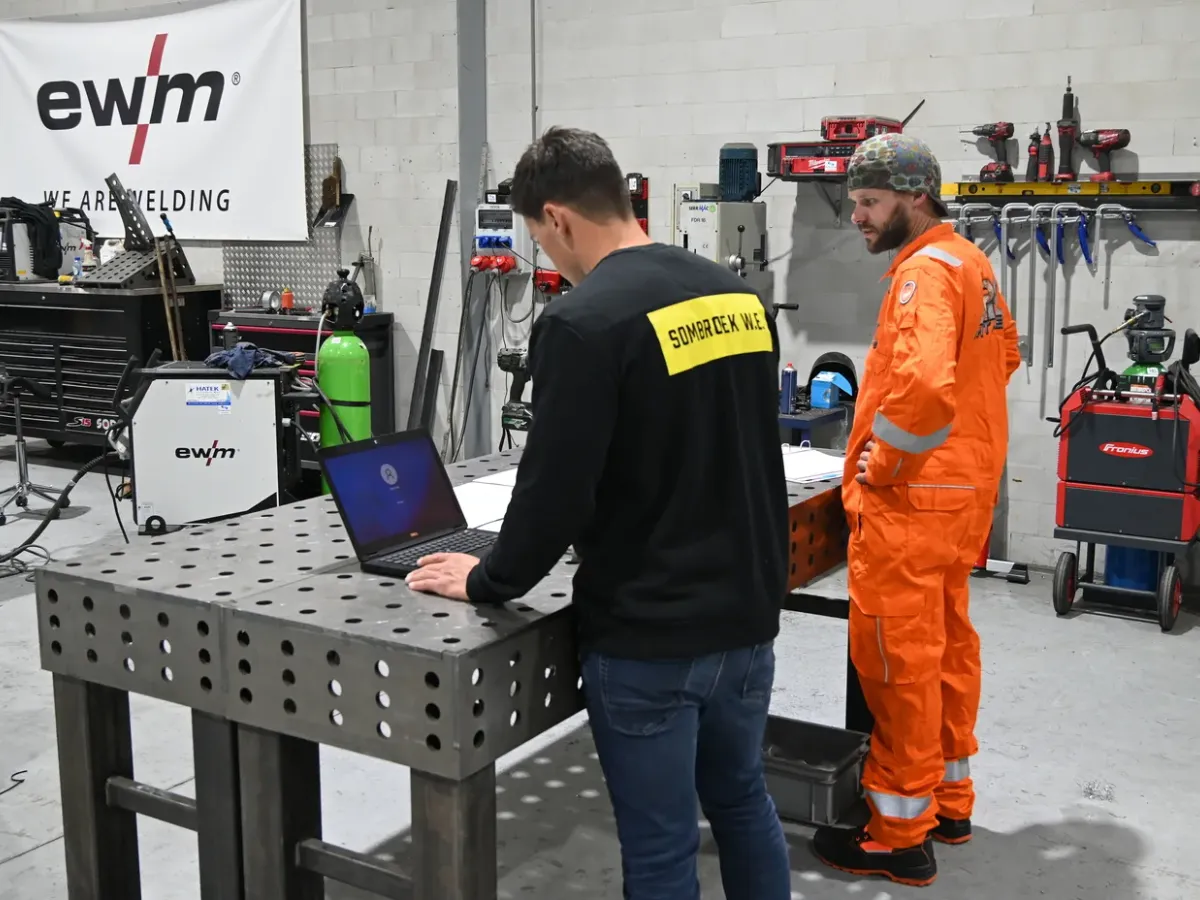
EN 1090: CE marking and execution classes
EN 1090-1 governs the CE marking of steel and aluminium structural components. CE marking has been mandatory since 1 July 2014. EN 1090-2 contains the technical requirements for the execution of steel structures, including welding.
The requirements depend on the execution class: EXC1 to EXC4, from light to heavy. The designer or client usually determines the class. If nothing is stated in the specification or on the drawing, EXC2 applies.
| Class | Typical application | Welding coordinator | Quality requirements ISO 3834 |
|---|---|---|---|
| EXC1 | Simple structures with limited consequences of failure | Not required | Part 4 (elementary) |
| EXC2 | Most residential and commercial buildings | Required | Part 3 (standard) |
| EXC3 | Heavier structures, such as bridges or structures subject to fatigue | Required | Part 2 (comprehensive) |
| EXC4 | Special structures with very serious consequences of failure | Required | Part 2 (comprehensive) |
The quality level of the welds also depends on the class. As a basis, EN 1090-2 links each class to a level from ISO 5817: from level D for EXC1 to level B with additional requirements for EXC4. Read more in our article on the quality levels of ISO 5817.
What level of knowledge does the welding coordinator need?
ISO 14731 distinguishes three levels of technical knowledge: basic (B), specific (S) and comprehensive (C). In practice these are often linked to the international diplomas IWS, IWT and IWE.
| Knowledge level | Often demonstrated with |
|---|---|
| B (basic) | IWS (International Welding Specialist) or dedicated EN 1090 training, such as RWC-B |
| S (specific) | IWT (International Welding Technologist) |
| C (comprehensive) | IWE (International Welding Engineer) |
The level required is specified in EN 1090-2. It depends on the execution class, the steel grade and the material thickness. An example for EXC2 with S235 to S355: up to 25 mm basic knowledge is sufficient, between 25 and 50 mm specific knowledge is required and above 50 mm comprehensive knowledge. For higher strengths, such as S420 to S700, and for EXC3, the bar is higher. EXC4 always requires comprehensive knowledge.
What does the welding coordinator arrange in practice?
The tasks from ISO 14731 run through the entire process. These come up in every workshop.
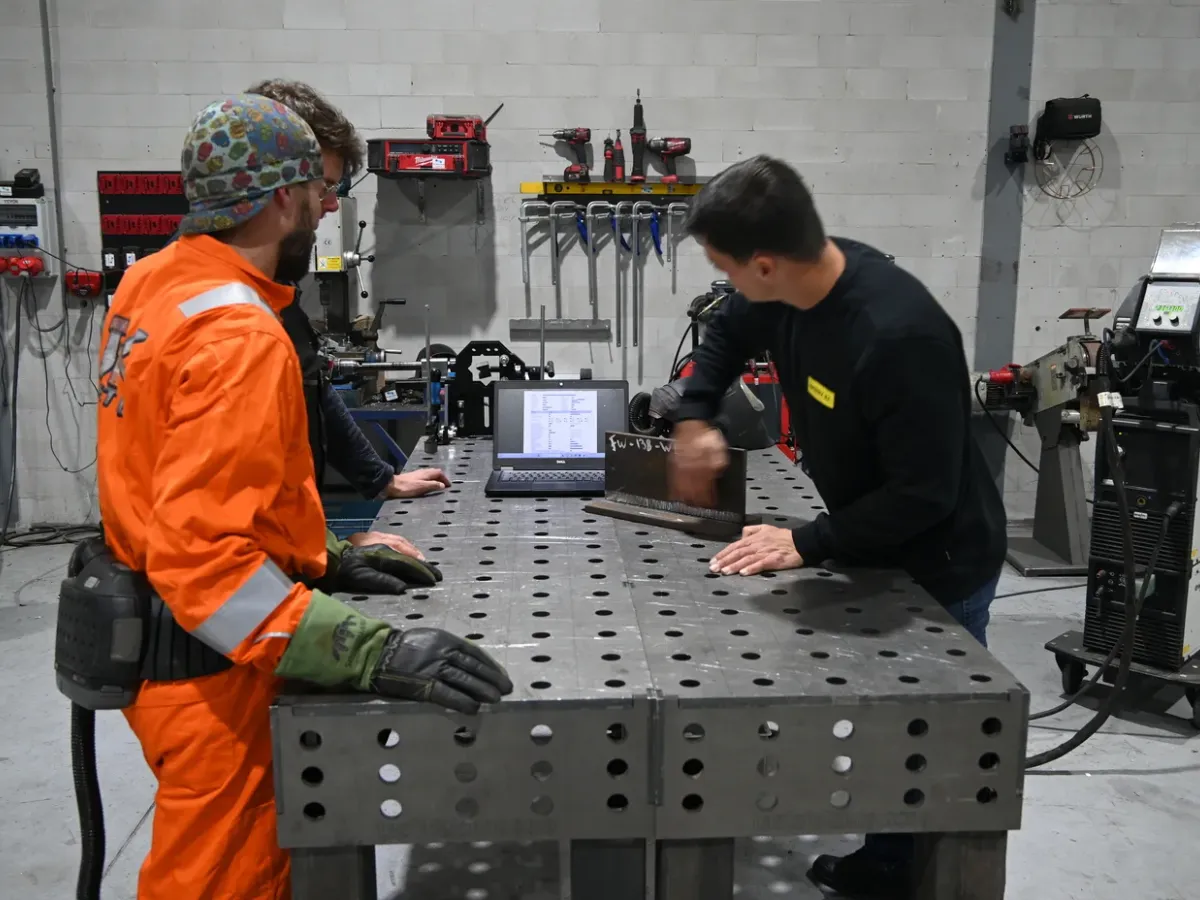
- Reviewing the order: which execution class, standards and requirements apply to the work?
- Welding procedures: providing suitable WPSs and the underlying qualifications (WPQR). For EXC2 more routes are allowed, such as standard welding procedures or demonstrable previous welding experience. For EXC3 and EXC4, a welding procedure test with a test piece is required, to ISO 15614-1 or ISO 15613.
- Welders: checking that welders are qualified to ISO 9606-1 for the work they do, and confirming the validity of their certificates every 6 months.
- Materials and consumables: the right materials, proper storage and drying of electrodes.
- Inspection and NDT: deciding what is checked, how and by whom, and how deviations and repairs are handled.
- Documentation: recording everything so that the work is traceable, including for audits.
You can read more about welding procedures in our article on WPS, WPQR and welder qualification. How to confirm and extend welding certificates is explained in how long is your welding certificate valid? For the visual inspection of the welds, see our article on visual weld inspection to ISO 17637.
With the LAS-ID app, the welding coordinator sees in one overview which welders’ certificates are valid and when one expires.
Outsource welding coordination or do it yourself?
Not every company has a welding coordinator on the payroll. A smaller fabrication shop can also work with an external welding coordinator, who checks in at agreed times and is responsible for the welding-technical side. Record the arrangements clearly: who is the RWC, which tasks lie with whom and how often is the welding coordinator present?
Even with an in-house welding coordinator, extra support can help, for example when preparing for an audit, a new type of project or setting up your welding documentation.
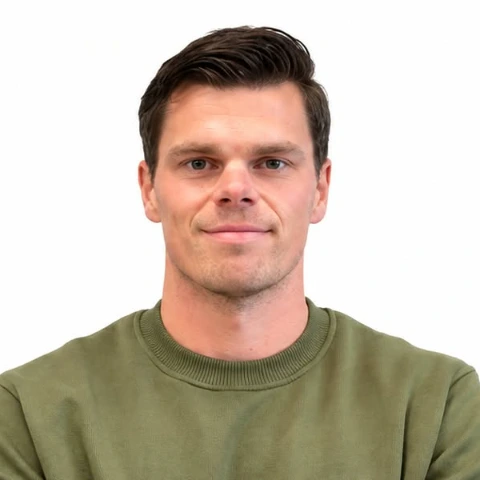
Marnix Sombroek
Specialist in welding coordination, weld inspection and welder qualifications
- IWT
- IWI-C
- VT-3
Marnix is your point of contact at Sombroek W.E. for questions about welding technology, inspection and qualifications. In this article he connects the requirements of the standard with the choices you make in the workshop. For advice on your situation, always discuss your work, certificate and project requirements.
Sources and accountability
- ISO 14731:2019: welding coordination, tasks and responsibilities.
- TWI: CE marking, EN 1090 and ISO 3834.
- TWI: fabrication requirements of EN 1090-2.
This explanation is general and does not replace the standard. The applicable edition of the standard, your certificate and the project requirements are decisive.
The specialisms and qualifications mentioned correspond to the company information of Sombroek W.E. Source links marked ↗ open in a new tab.