


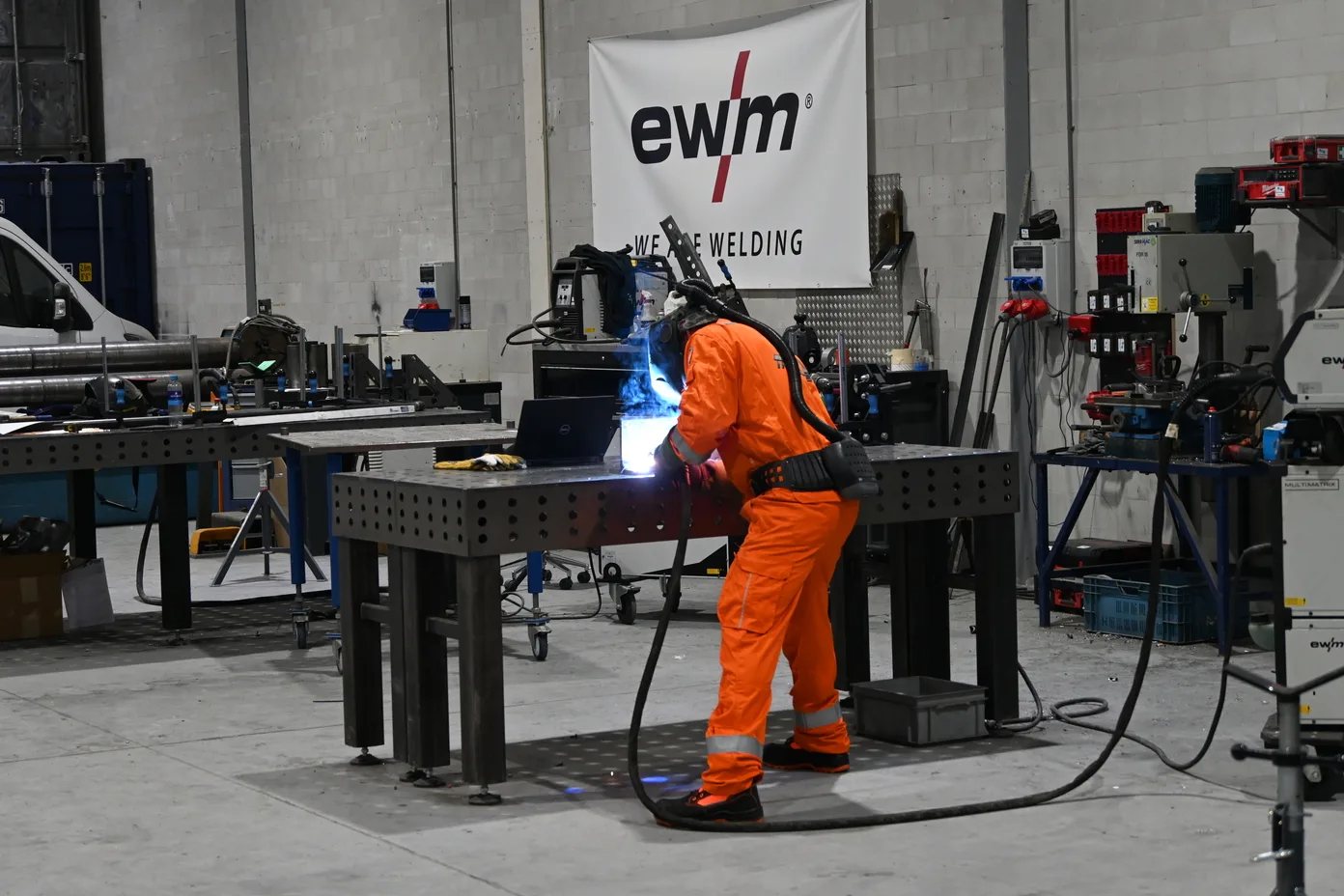
Welding processes 111, 135, 136 and 141 explained
What do the numbers 111, 135, 136, 138 and 141 on your WPS and welding certificate mean, and when does a different process require a new welding test?
Where do the process numbers come from?
On your welding certificate, your WPS and often on drawings too, the welding process appears as a number: 111, 135 or 141. That number helps determine what you are allowed to weld with your certificate. In this article you will read what the most common process numbers mean and when a different process requires a new welding test.
The numbers come from ISO 4063. That standard gives every welding and cutting process a fixed reference number of up to three digits. The first digit is the main group: 1 stands for arc welding, 3 for gas welding. Each further digit makes the process more specific.
Because everyone uses the same numbers, anyone can read a WPS or certificate, whatever the country. A German client and a Polish welder both know what ‘135’ means.
The process numbers you come across most often
On welding certificates for steel, these are the processes you will see most:
| Number | Process | In practice |
|---|---|---|
| 111 | Manual metal arc welding with covered electrode (MMA, stick) | Robust and portable; widely used on site and during erection. |
| 114 | Self-shielded tubular cored arc welding | Cored wire without shielding gas, useful outdoors in the wind. |
| 121 | Submerged arc welding with solid wire | Mechanised welding of long, thick seams. |
| 131 | MIG welding with solid wire | Welding under inert gas, for example on aluminium. |
| 135 | MAG welding with solid wire | The workhorse in structural steelwork and fabrication shops. |
| 136 | MAG welding with flux-cored wire | High deposition and good in position, with slag on the bead. |
| 138 | MAG welding with metal-cored wire | High deposition with little slag. |
| 141 | TIG welding with filler wire or rod | Precise and clean; often used for root runs in pipework and for stainless steel. |
| 142 | TIG welding without filler material | Thin material and edge welds. |
| 311 | Oxy-acetylene welding | Thin-walled pipes and repair work. |
Do you see letters such as MMA, MAG, SMAW or GTAW in a document? These are abbreviations for the same processes. American codes, such as AWS D1.1 and ASME IX, mainly use those abbreviations.
What does the process mean for your welding certificate?
Under ISO 9606-1, the welding process is an essential variable. A welding test qualifies you for one process in principle. If you want to weld with a different process, you need a new welding test for it. There are a few exceptions:
- Solid and metal-cored wire. In MAG welding, solid wire (135) and metal-cored wire (138) qualify each other, in both directions. The same applies to submerged arc welding (121 and 125).
- Short-circuit transfer. For 131, 135 and 138, a test with short-circuit transfer (short arc) also covers spray and globular transfer, but not the other way round.
- With and without filler material. A test with filler material also covers welding without filler material, but not the other way round.
The filler material counts too. For manual metal arc welding (111) and for welding with cored wire (114 and 136), the type of covering or core, for example basic or rutile, helps determine the range of your certificate. And if your certificate says ‘135’, you cannot simply weld with flux-cored wire (136).
Several processes in one test piece
In pipework, a combination is common: the root run with TIG (141) and the fill and cap passes with stick (111) or MAG (135). You can qualify that combination in one test piece. Your certificate will then state, for example, ‘141/111’.
Note: the thickness range then applies per process. It depends on the weld metal thickness you deposited with that process. If you only lay a thin root with 141, your range for 141 will be limited too. In our article on the combination welding certificate 141 you can read how to approach this smartly.
A test piece with several processes must contain at least one stop and restart for each process. These spots are marked so that the examiner can assess them later.
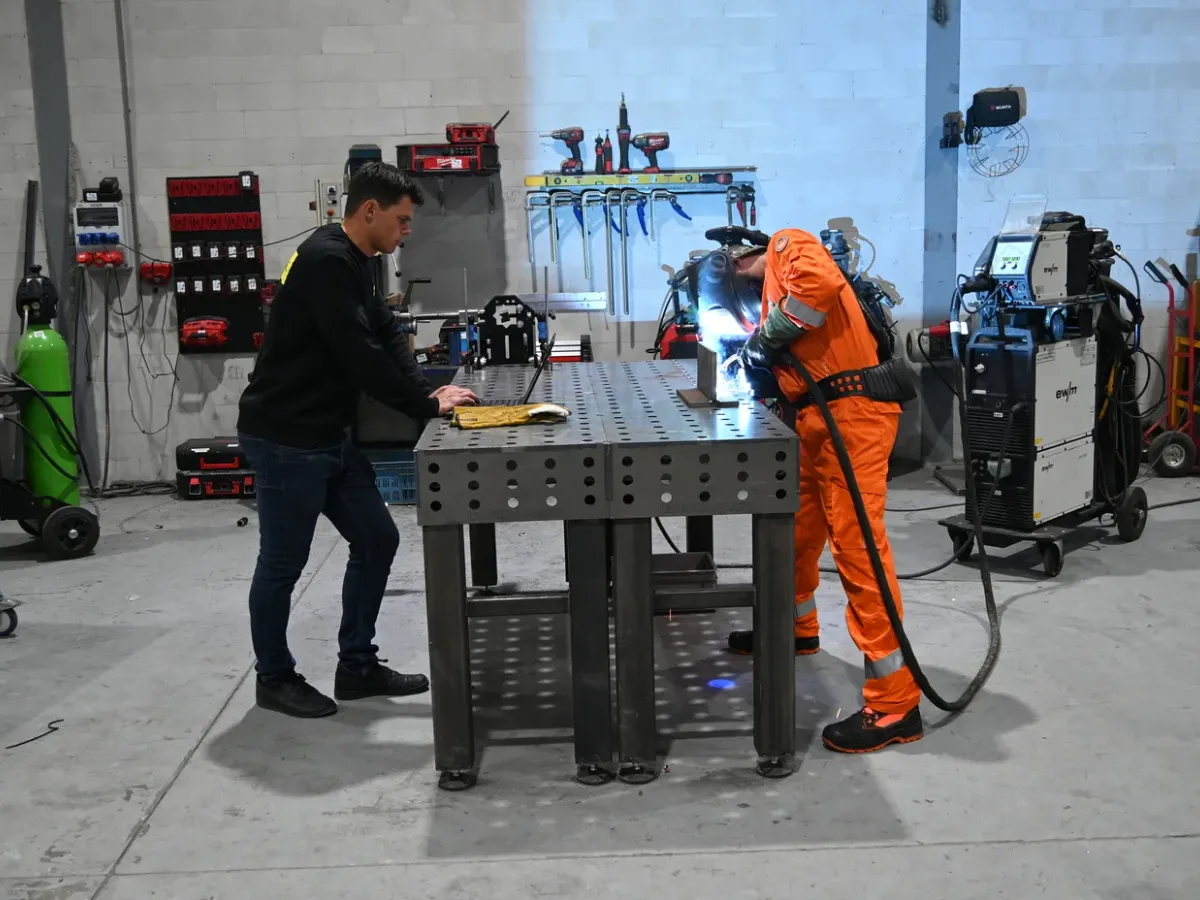
Which process do you choose for your welding test?
Choose the process you actually use in your work, or the one your client specifies. In doubt? Then look at the project WPS: it states the process, the filler material and the positions. Also read our article on the difference between WPS, WPQR and welder qualification.
- Look at the WPS for the job. The process on your certificate must match the process in the WPS.
- Think about combinations. Do you weld pipes with a TIG root? Then qualify the combination in one test piece.
- Choose your range deliberately. Process, thickness, diameter and position together determine what you may weld. Discuss this with the examination organisation in advance.
- Prepare well. In the article ISO 9606-1 welding test: how to prepare well you will find eight practical tips.
With certificates for several processes, it is easy to lose track. The LAS-ID app keeps all your certificates in one place, and you get a notification in good time before one expires.

Marnix Sombroek
Specialist in welding coordination, weld inspection and welder qualifications
- IWT
- IWI-C
- VT-3
Marnix is your point of contact at Sombroek W.E. for questions about welding technology, inspection and qualifications. In this article he connects the requirements of the standard with the choices you make in the workshop. For advice on your situation, always discuss your work, certificate and project requirements.
Sources and accountability
- ISO 4063:2023: nomenclature of processes and reference numbers.
- NEN-EN-ISO 9606-1: qualification testing of welders, fusion welding of steels.
- TWI: comparison of EN 287-1 and ISO 9606-1.
This explanation is general and does not replace the standard. The applicable edition of the standard, your certificate and the project requirements are decisive.
The specialisms and qualifications mentioned correspond to the company information of Sombroek W.E. Source links marked ↗ open in a new tab.